


- /
- By Admin /
- Categories /
- News /
"Gwanwyn" - Behind the Scenes
Dylan: The audience response has been very special and we want to take this music further - it's a journey for us and it's a journey for our audience.
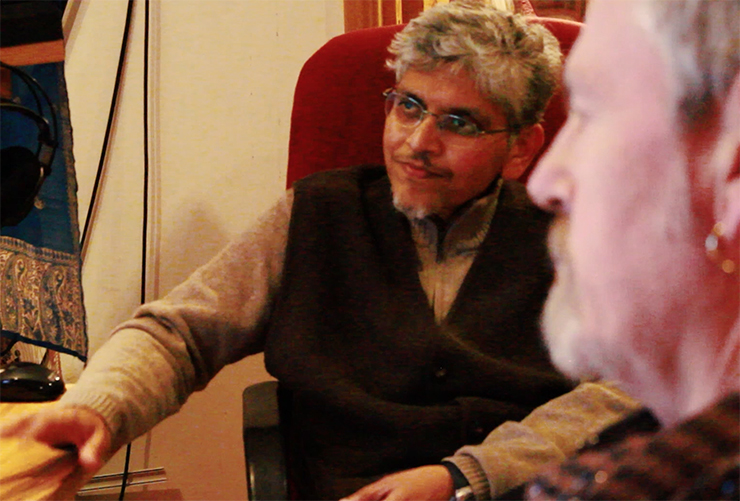
Rajesh: We all three are very excited by this album, the way it is shaped and the process of developing the music; we are so excited that we are already planning CD two. We want to continue making this music, bringing in new music, developing the style, and keep going - reaching out to the audience, reaching out as much as possible into the world.
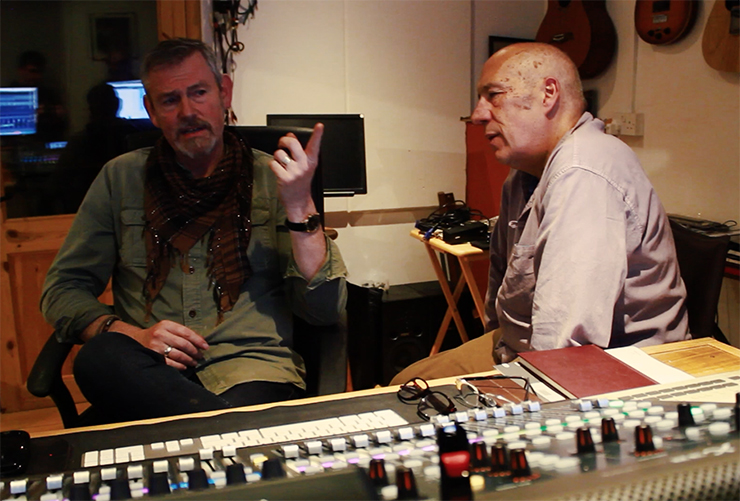
Pete: What we've got here with Tŷhai is very special – I have worked with Dylan for many decades on and off in various collaborations - but somehow Tŷhai is a special match. You don't always get that - where things fit together so beautifully. I think we can continue to grow this: it's working very well, but I'm sure it can develop into even more interesting and richer repertoire.
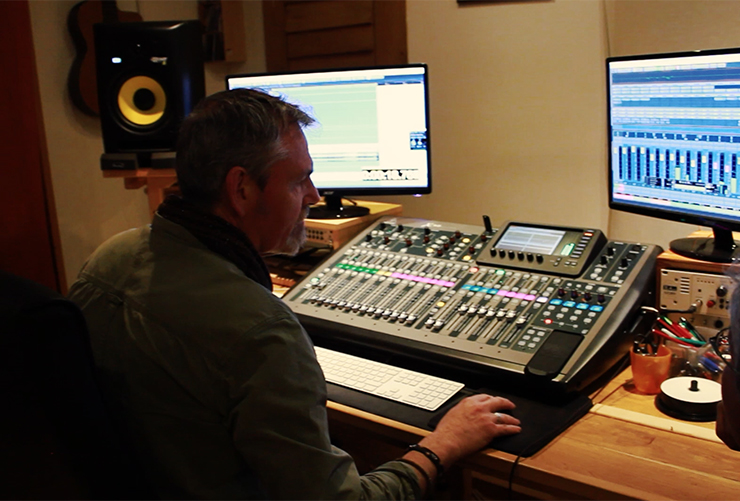
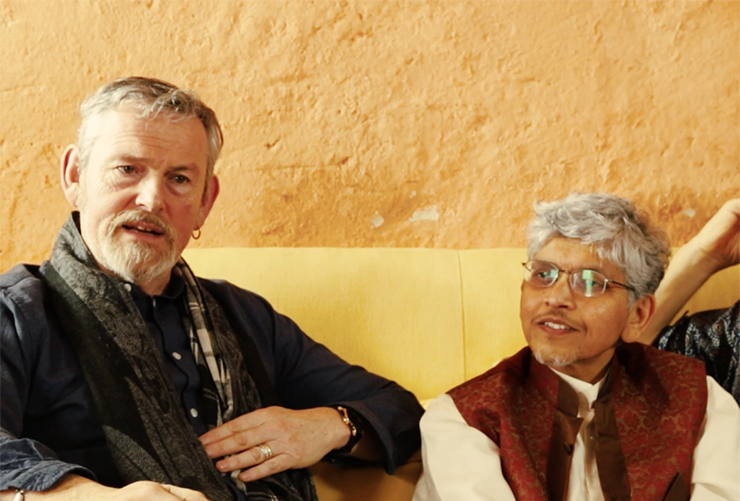
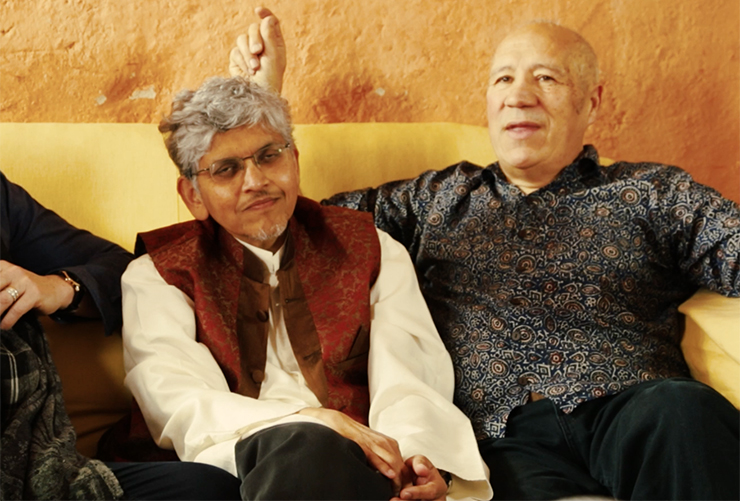
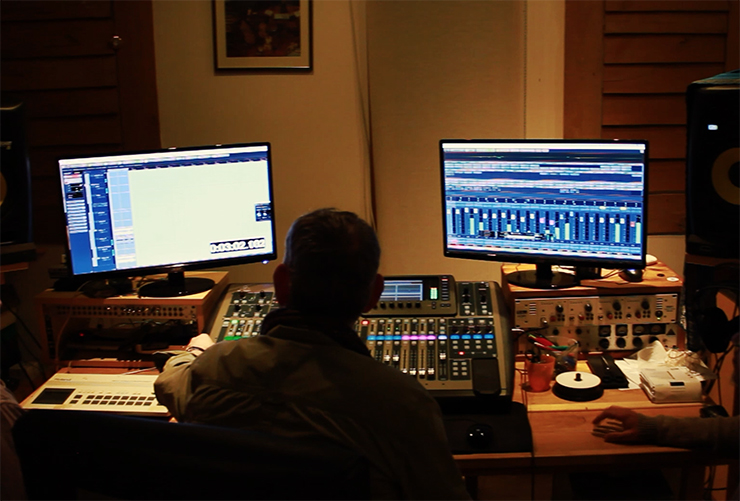
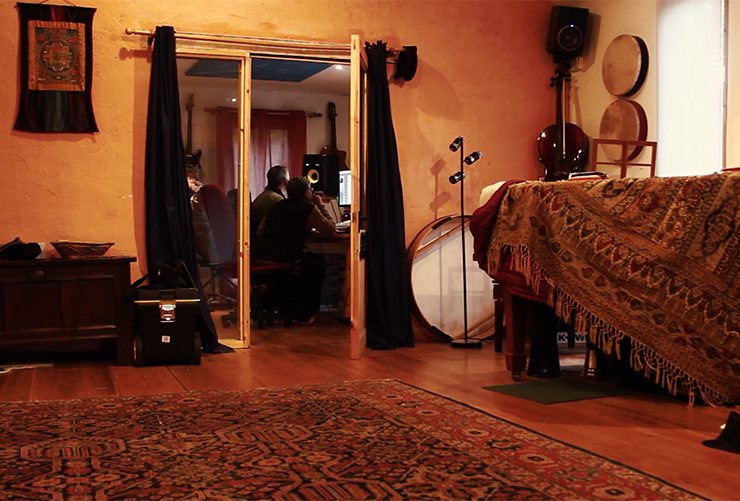
Rajesh:: We've been working on the album for the past year now; we worked hard on it and we have developed a unique sound for ourselves. The three of us have grown very close together in the production of the CD. The album is called ‘Gwanwyn’ which is the Welsh word for spring. The style of music is the music of Tŷhai: it's a collaboration between the Celtic folk style, which Dylan brings with his guitar; Pete has his own style which is jazz and folk based, but also with elements of western classical music. I am coming from the Indian tradition of music Indian classical music, Indian contemporary music, Indian folk music – all these styles come together in our music.
Dylan: When you're doing collaborations, you want to get to the point that the sum is
greater than the parts and you eventually end up with something that is its own thing. We feel that's
what we are doing with Tŷhai.
Rajesh: - The starting points could be various but mostly what happens is that one of us brings in a tune: for example, with ‘Gwanwyn’ it was Dylan who brought in the original piece of music.
Dylan: - Yeah, it's an interesting piece. My wife first came across this tune in a wonderful collection by Maria Jane Williams of music from Southeast Wales called ‘Ancient and National Airs of Gwent and Morganwg’. She introduced it to me a long time ago now. We first played it with our group Taith which was a collaboration between Welsh and Finish music – and I've played it with many people. It's an extraordinary piece because it really sounds unlike anything else. It certainly doesn't sound like what you would normally associate with Celtic music. It has its own sound world and specifically Its own kind of raga. When we first started working on it together in Tŷhai it sort of became our template. We started with this tune – Raj brings in all the other things that he does – he is very much involved in the language side of things. In ‘Gwanwyn’, for example, he brings in a poem by Dafydd ap Gwilym. Then Pete wrote a piece of music which was based on the tune - so it was a real journey all starting with a beautiful tune from Southeast Wales.
Pete: - The structure of ‘Gwanwyn’ is like an Indian classical recital where you start with music which is very slow - a bit like putting a pot on the stove, at first it's cold, it comes from stillness, then gradually it warms up until the rhythm starts to cook and by the end of the piece it’s complete fireworks! In this way our ‘Gwanwyn’ is like a classical Indian recital, but also it seems to encapsulate the energy and spirit of the arrival of spring: an energy that Dylan Thomas described as ‘the force that through the green fuse drives’. That's what we tried to do with the ‘Gwanwyn’: it's quite long – a lot of our music is quite extended - but if you stay with it, by the time you get to the end hopefully you'll get a good feeling from it.
Rajesh: - - I'm a Welsh learner, so I'm always looking for opportunities to sing in Welsh, to speak in Welsh, to use the things that I have learned in my class. Singing in Welsh is something that excites me and I love to do that. So, when Dylan brought in the tune of ‘Gwanwyn’, I started looking for words to sing – Dylan mentioned to me that there was an original song going along with the tune – but I wanted to create something different so I started to think of poetry. And this is what we usually do in Indian music – when we have a tune or when we are composing tune, but looking for words. There is a huge body of work, of poetry, poems and verses from Scriptures: you just pick up anything and put it into a tune. I was thinking why don't we do the same thing from a Welsh point of view? So, I looked at Welsh poems I found this beautiful poem by Dafydd ap Gwilym about the month of May which matched with the spring idea. And when I sang it out to Dylan and Pete, we all liked it. And so, we brought that in – that was the next angle in this – Dylan's tune, then we got a song going in Welsh, and then when Pete composed his tune and we brought that in – so, now we have three streams flowing together?
Pete: - We decided to end the number with a tihai; this is a technique used in Indian music at the end of the piece. It is a form of rhythmic cadence in which a phrase is repeated three times, often cutting against the underlying metre to create a polyrhythm which is then resolved on to the first beat of the time cycle. This is a device that we enjoy using so much in our music that we have adapted the word tihai to form the name of the band, but giving the first part the Welsh spelling tŷ (the Welsh word for house). The first syllable also sounds like it could be the name of our favourite drink.
Dylan: Yes, tea drinking has always been part of our creative process!
